
Last updated October 30, 2026
 House lockouts
 Re-keying
 Deadbolt upgrades
 Smart locks
 Schlage
 Kwikset
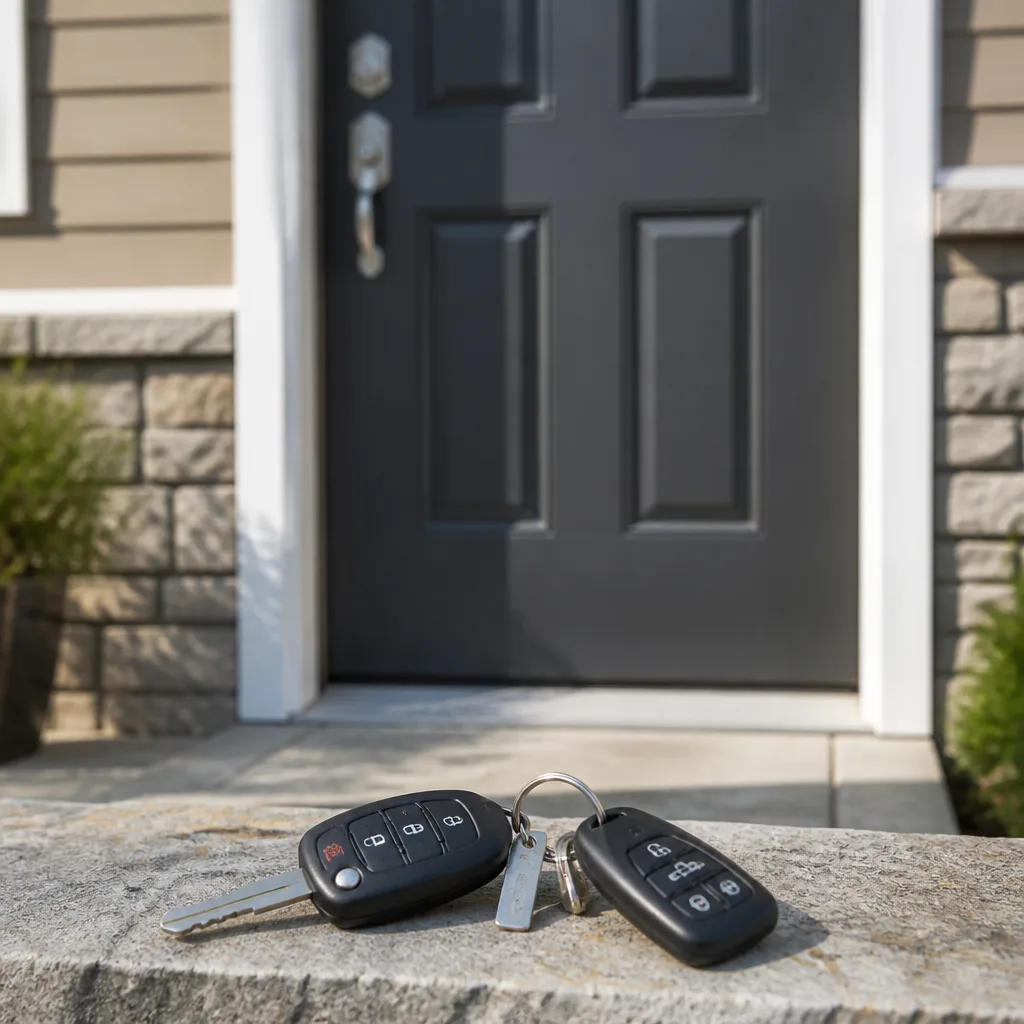 Car keys & fobs
Non-destructive entry first, always - and we re-key Schlage, Kwikset, and Baldwin locks on the spot while you watch
You get a price before we start. It does not change when we arrive. No surprises.
Get your free estimateCar Key Replacement Maintenance Checklist for Arlington Homeowners
A dead key fob battery is not just an inconvenience. It can mask a failing transponder chip. The day you finally replace that battery is also the day you discover your key won’t start the car at all. Arlington drivers know this scenario too well: the truck is parked in the driveway off Cooper Street, the morning commute is already running late, and the key that worked yesterday now spins the ignition without a single click from the starter. This guide is a maintenance checklist built for Arlington homeowners who want to catch key problems before they become roadside emergencies. You’ll learn what to inspect, when to inspect it, and how to avoid a dealership bill that can run $300 to $500 for a replacement you could have prevented.
Styles & brands we work with
Quick Answer
A car key maintenance checklist for Arlington homeowners should include four inspections every 90 days: battery voltage testing, physical key blade wear, fob casing crack checks, and transponder signal verification. Arlington’s summer heat accelerates key fob battery degradation, so testing before June and again before September catches most failures early. If your key shows any weakness during these checks, a locksmith replacement costs $150 to $350 versus $300 to $500 at a dealership, and the full price is quoted on the phone before anyone is dispatched.
Table of Contents
- The 90-Day Seasonal Inspection Checklist
- Why Arlington’s Summer Heat Kills Key Fobs Faster
- The Cost Hierarchy: Battery, Programming, Full Replacement
- Which Key Type Your Vehicle Uses (And Why It Matters)
- How to Store a Spare Key So It Actually Works When You Need It
- Warning Signs Your Key Is About to Fail
- Common Mistakes to Avoid
- When to Call a Professional
- Frequently Asked Questions
- The Bottom Line
The 90-Day Seasonal Inspection Checklist
Car keys are mechanical and electronic devices. Both halves wear down, and both halves fail at predictable intervals. The best defense is a 90-day inspection cycle tied to the calendar rather than to symptoms. By the time a symptom appears (the car won’t start, the remote works only at close range, the fob cracks open), you’re already in replacement territory. A quarterly check catches wear while it’s still a $4 battery or a $15 casing swap.
Here’s the four-point inspection we recommend for every Arlington driver:
- Battery voltage test. Most key fobs use a CR2032 or CR2025 coin cell battery rated at 3 volts. Anything measuring below 2.7 volts under load is on borrowed time. A $10 multimeter from any Arlington hardware store does this job in 30 seconds. If you don’t own a multimeter, a fresh battery swap every 12 months is a cheap insurance policy.
- Blade wear inspection. Physical key blades (on flip keys and traditional transponder keys) wear down with every insertion. Look for rounding at the tip, visible grooving that looks shallower than it once did, or a key that requires a wiggle to turn the ignition. Excessive blade wear forces the wafer tumblers in the ignition cylinder, which means more force, which means more wear, which eventually means a broken key in the ignition.
- Fob casing crack check. Press the fob at the seams. Run your thumbnail along the edges. Hairline cracks let in moisture, and Arlington’s humidity combined with summer heat creates condensation inside the fob, which eats circuit boards. If the casing is cracked, a replacement shell costs $15 to $40. A damaged circuit board costs $150 or more to replace.
- Transponder signal verification. The transponder chip in the key communicates with the car’s immobilizer system. When the chip weakens, the car may intermittently fail to start, or the dashboard security light may stay illuminated longer than usual. A locksmith who offers car key replacement in Arlington can test transponder strength in under two minutes. If the signal is weak, replacing the key before it dies outright avoids a tow truck call.
Run through this checklist in March, June, September, and December. June and September matter most in Arlington because they bookend the summer heat that does the most damage.
Why Arlington’s Summer Heat Kills Key Fobs Faster
Arlington routinely hits 95 degrees in July and August. The inside of a parked car in that heat reaches 130 to 150 degrees within an hour. That temperature is brutal on the components inside a key fob: the lithium coin cell battery, the rubber gasket that seals the casing, and the plastic housing itself. The heat does damage in three distinct ways.
Battery chemistry breakdown. Lithium coin cells are rated to operate safely up to about 140 degrees. Park a car on an Arlington street in direct August sun, and the dashboard becomes a slow-cooker. The battery’s electrolyte breaks down faster, internal resistance climbs, and the battery’s effective lifespan shortens from a typical 3 to 4 years down to 18 months or less. A battery that tests at 3.0 volts in January might read 2.5 volts by August.
Rubber gasket drying and cracking. The silicone or rubber seal inside a key fob keeps moisture and dust out of the circuit board cavity. Arlington’s heat-and-humidity pattern dries that gasket out faster than the national average. A dried gasket no longer seals, which lets in sweat, humidity, and the occasional splash. Once moisture reaches the circuit board, corrosion starts. We’ve seen fobs from Arlington trucks that looked fine on the outside but had green corrosion on the board inside, killing the transponder gradually until the vehicle refused to start one morning.
Plastic housing warping. The plastic used in most key fob casings begins to soften and warp at sustained temperatures above 120 degrees. A warped casing puts uneven pressure on the internal buttons and the battery contact tabs. The fob may still work, but the internal components are under stress they weren’t designed to carry. Warped casings also crack sooner, accelerating the moisture problem.
The practical takeaway: if you park outside in Arlington, run the battery voltage test twice during the summer months. June and September checks catch most heat-related failures before they become no-start conditions.
The Cost Hierarchy: Battery, Programming, Full Replacement
Car key problems have a clear cost hierarchy. The trick is knowing which tier you’re in before you spend money you don’t need to spend. Here’s the breakdown, using numbers we’ve seen consistently in the Arlington market.
| Service | Typical Cost Range | Time Required | When It’s the Right Call |
|---|---|---|---|
| Fob battery replacement | $4 – $15 (DIY) or $10 – $25 (locksmith) | 5 minutes | Remote works intermittently, low voltage reading, no other symptoms |
| Fob casing replacement | $15 – $40 | 15 minutes | Cracked or warped casing, buttons sticking, no internal damage |
| Fob programming only | $50 – $100 | 30 – 45 minutes | New fob shell or donor fob, existing transponder still works |
| Full key + transponder replacement | $150 – $350 (locksmith) | 1 – 2 hours | Lost key, dead transponder, broken blade, no spare available |
| Dealership replacement (same work) | $300 – $500+ | Often 2 – 3 days | Locksmith unavailable or vehicle under warranty with free key coverage |
The most common scenario we see in Arlington is a driver who ignored a weak battery for months, the battery died and the transponder lost its programming at the same time, and now the car won’t start. That’s a full replacement, and it should have been a battery swap. The quarterly inspection prevents exactly this. When replacement is necessary, a locksmith handles the same job a dealership does, at roughly half the cost, usually same day.
One more thing worth saying plainly: the full price is quoted on the phone before anyone is dispatched. What you’re quoted is the price on the invoice. There’s no call-out surcharge added on arrival. This matters in the emergency locksmith in Arlington market, where some companies advertise a low teaser number and then stack charges once they’re standing in your driveway.
Which Key Type Your Vehicle Uses (And Why It Matters)
Not all car keys are the same, and Arlington’s vehicle mix skews toward trucks and SUVs. Ford F-150s, Chevrolet Silverados, Toyota Tundras, Honda CR-Vs, and Jeep Wranglers fill the parking lots at AT&T Stadium on any given Sunday. Each of those vehicles uses one of three key types, and replacement complexity varies significantly.
Traditional transponder keys. These look like a standard metal key but contain a small RFID chip in the plastic head. The chip communicates with the vehicle’s immobilizer. When you insert the key and turn the ignition, the car reads the chip. If the chip signal is missing or weak, the engine won’t start. Traditional transponder keys are common on older trucks and base-model SUVs. Replacement requires metal cutting and chip programming, which most locksmiths handle in about 30 minutes.
Proximity keys (also called smart keys or keyless entry fobs). These stay in your pocket or purse. The car detects the fob’s presence and unlocks the doors and allows push-button start. Proximity keys are common on newer F-150s (2015+), most Toyota SUVs, and almost every 2018+ vehicle sold in Arlington. Replacement is more involved because the fob must be programmed to the specific vehicle’s immobilizer system, and the vehicle must be present for the programming.
Flip keys. These combine a metal blade that flips out of a plastic fob body, with a transponder chip in the fob. They’re common on older CR-Vs, Jettas, and many 2010 – 2015 vehicles. The flip mechanism itself is a failure point: the spring wears out, the blade doesn’t lock into position, and eventually the blade breaks at the pivot. Replacement requires both blade cutting and chip programming.
Why this matters for your maintenance checklist: knowing your key type tells you what to watch for. Proximity key owners should watch battery voltage and casing condition carefully because everything depends on the fob. Traditional transponder key owners should watch blade wear and ignition tightness. Flip key owners should test the flip mechanism monthly and replace the casing at the first sign of pivot looseness. If you’re not sure which key type your vehicle uses, any locksmith who offers car key replacement in Arlington can identify it in minutes.
How to Store a Spare Key So It Actually Works When You Need It
You bought a spare key. Good. Now where is it? If the answer is “in the glove box,” you’ve made the single most common spare key mistake we see in Arlington, and it’s the one that turns a bad day into a truly expensive one. A spare key stored inside the vehicle is useless when the vehicle is locked and the primary key is dead or lost. It also means a thief who breaks into your car now has both a vehicle and a key.
Here’s the correct storage protocol for a spare key so it’s functional when you need it:
- Store it inside your home, not inside your vehicle. A kitchen drawer, a home safe, or a dedicated key hook near the back door works. The point is that the spare lives somewhere you can access regardless of what’s happening with the car. If you’re locked out of the car, you can get into the house. If you’re locked out of both, call an emergency locksmith in Arlington.
- Remove the battery from a spare proximity fob if stored long-term. Proximity fobs draw a small amount of current even when unused. A fob stored for two years with the battery installed may be dead exactly when you need it. Storing the battery separately, taped to the fob casing, preserves the battery. Just remember to reinstall it before use.
- Test the spare key every time you run the quarterly inspection. Start the car with the spare, not just the primary. A spare that has never been used may have a programming fault you won’t discover until it’s your only key.
- Keep the spare in a Faraday pouch if it’s a proximity key. This blocks the fob’s signal and prevents relay attacks, where a thief uses a signal amplifier to capture your key’s signal from outside your home and unlock the vehicle. Faraday pouches cost $10 to $20 and are sold at most Arlington electronics stores.
- Store the key in a dry, cool location. Heat is the enemy. The garage reaches 110+ degrees in Arlington summers. A spare key stored on a garage wall peg will degrade faster than one stored in the climate-controlled house.
If you don’t have a spare key and you’re still using a single working key, the time to get a spare is now, not after the primary fails. A spare cut and programmed while your primary still works costs $150 to $250. A replacement made after the primary is lost or dead requires more work (and sometimes a tow) and costs $200 to $350. The economics are simple: the spare is cheaper.
Warning Signs Your Key Is About to Fail
Car keys rarely fail without warning. They announce their decline in small ways that most drivers ignore because the car still starts, the doors still unlock, and it’s easy to assume the problem will fix itself. It won’t. Here are the symptoms we hear about most often from Arlington drivers, in the order they typically appear.
Decreased remote range. You used to unlock the car from 50 feet away across the parking lot at The Parks Mall. Now you have to be standing next to the driver’s door before the fob works. This is the earliest and most reliable sign of a weakening battery. Fix it now, before the battery dies entirely.
Intermittent starting problems. The car starts fine most of the time, but every few days it takes two or three tries. The dashboard security light blinks when it shouldn’t, or stays on longer than normal after the engine starts. This is often a transponder chip that’s losing its signal strength. It may work for weeks more, or it may fail tomorrow. Don’t gamble.
Sticky or unresponsive buttons. The unlock button requires a hard press. The panic button doesn’t trigger. The trunk release works only sometimes. This is usually a worn internal button membrane or a cas[ing] that’s misaligned from heat warping. It’s a $15 to $40 fix today, and a full key replacement later if water gets in through the failing button.
Ignition stiffness or key wobble. The key requires a wiggle to turn. The ignition cylinder feels tight. The key blade shows visible flat spots or rounding. Blade wear is progressive: each use wears the blade and the cylinder together. A badly worn key blade can snap off inside the ignition, which turns a $20 blade replacement into a $150+ ignition extraction job.
Dashboard warnings. Some newer vehicles display a “key not detected” message or a low key battery warning. If your car has this feature, pay attention to it. It’s the only early warning most key systems provide.
Any one of these symptoms is worth a 10-minute check with a multimeter and a visual inspection. Any two of them means it’s time to get the key replaced before it leaves you stranded.
Common Mistakes to Avoid
- Ignoring reduced remote range. Decreased range is the earliest warning of a dying battery, and it’s the cheapest fix on the entire checklist. Ignoring it for weeks or months turns a $4 battery into a $200 key replacement when the transponder loses programming during the dead-battery period.
- Storing the spare key inside the vehicle. A spare in the glove box or center console is useless when you’re locked out, and it’s a liability if the car is broken into. Store the spare in your home, away from heat and moisture.
- Going to the dealership first without comparing prices. Dealerships charge $300 to $500 for a replacement that a locksmith does for $150 to $350. The key is the same. The programming is the same. The price is not. Arlington locksmiths come to your location, while the dealership requires you to get the vehicle to them, often by tow if the key is dead.
- Replacing only the battery after a transponder failure. A new battery won’t fix a transponder chip that has already lost its programming. If the remote locks and unlocks but the car won’t start, the battery isn’t the problem. Test the transponder signal before spending money on a battery that won’t help.
- Using the same key for the house and the car on one ring. Heavy key rings stress the key blade and the ignition cylinder. A car key with three house keys, a mailbox key, and a gym fob hanging from it wears out faster and puts unnecessary torque on the ignition every time you start the car. Keep the car key on its own ring.
- Waiting until the only key is dead to make a spare. The cheapest time to make a spare is when a working key still exists. Making a spare from a working key is simple cutting and programming. Making a replacement from a lost or dead key involves more work, often a tow, and a higher bill.
- Assuming all key fobs are replaceable at any hardware store. Hardware store duplicators handle simple metal keys. Most modern transponder keys and proximity fobs require specialized programming equipment that only locksmiths and dealerships have. A hardware store copy of a transponder key may start the doors but not the engine.
When to Call a Professional
Some key maintenance tasks are DIY-friendly: battery voltage testing, casing inspection, blade visual checks. Others belong in professional hands. If your key has a cracked casing with visible internal components, if the transponder signal tests weak or fails, if the key blade is visibly worn or bent, or if you’ve lost the only working key, you need a professional. Programming a transponder or proximity key requires specialized equipment that reads the vehicle’s immobilizer and writes the new key to the system. Attempting it without that equipment is a waste of time. Stalwart Locksmith offers free estimates in Arlington, we handle car key replacement and emergency locksmith service, and the full price is quoted over the phone before anyone is dispatched. Call (877) 626-0257.
Frequently Asked Questions
Car key replacement in Arlington typically costs $150 to $350 at a locksmith, depending on the key type and vehicle year. Battery replacement is $4 to $25, fob programming is $50 to $100, and a dealership replacement for the same key runs $300 to $500 or more. The exact price is quoted on the phone before anyone is dispatched. Call (877) 626-0257 for a free estimate on your specific vehicle.
Yes. The price quoted on the phone is the price on the invoice. There is no call-out surcharge and no dispatch fee added when the locksmith arrives. This is standard practice for Stalwart Locksmith, and we say it plainly because the locksmith trade has a widely reported problem with bait pricing. If a company won’t quote a firm price over the phone, that’s a red flag.
Emergency locksmith response in Arlington is typically available same day, and lockout situations are prioritized because they can’t wait. The specific arrival window depends on call volume and your location in Arlington, so call (877) 626-0257 for a current ETA. We’ll tell you the expected arrival window honestly before you commit to anything.
Yes. If you’ve lost all keys to the vehicle, a locksmith can create a replacement by reading the vehicle’s immobilizer system and cutting a new key to match the ignition cylinder. This requires the vehicle to be present, and in some cases the VIN and proof of ownership. The process takes one to two hours and costs more than a spare made from a working key, which is why we recommend making a spare before you need one.
Arlington’s summer heat accelerates key fob battery degradation and dries out the rubber gaskets inside the fob casing. Interior car temperatures reach 130 to 150 degrees, which shortens lithium coin cell lifespans from 3 to 4 years down to 18 months or less. Checking battery voltage in June and September catches heat-related failures before they become no-start conditions.
Stalwart Locksmith handles car key replacement for the major makes and models common in Arlington, including Ford, Chevrolet, Toyota, Honda, and Jeep. Traditional transponder keys, flip keys, and proximity keys all fall within our standard capabilities. If you’re not sure what type of key your vehicle uses, call (877) 626-0257 and we’ll identify it over the phone.
The Bottom Line
Car key failures are predictable if you’re looking. Run the 90-day inspection: battery voltage, blade wear, casing cracks, transponder signal. Pay extra attention in Arlington’s summer, when heat stress shortens key component lifespans. Store your spare key correctly, away from the vehicle, in a cool dry place, and test it quarterly. When a key needs replacement, a locksmith does the same work as a dealership at roughly half the cost, with the full price quoted up front. The checklist takes 10 minutes every three months. The alternative, a dead key in the driveway at 7 a.m. on a workday with no spare and no plan, costs hours and hundreds of dollars. For more on key replacement, visit our car key replacement guide for Arlington. For urgent access needs, our emergency locksmith service in Arlington is built for the moment it can’t wait. And if you’ve just moved or need a security reset, rekeying locks in Arlington protects your new home without full hardware replacement. Your car, your home, your business, one locksmith. Call (877) 626-0257 for a free estimate.
Written by the team at Stalwart Locksmith, serving Arlington since 2018.